
EPR
Extended Producer Responsibility (EPR)
Extended Producer Responsibility (EPR) is a national environmental management framework that requires producers, brand owners, importers, and reconditioners to take accountability for the entire lifecycle of their products – from production to post-consumer stage.
Under the EPR system, businesses must ensure that products and packaging are responsibly collected, cleaned, reconditioned, or recycled to reduce environmental impact. The goal is to drive a circular economy, where waste is minimised, materials are reused, and sustainability becomes a measurable standard of performance.
SAICRA ensures that compliance with EPR regulations is achievable, measurable, and aligned with the DFFE’s sustainability objectives.
Under Section 18 of the Waste Act, the EPR fee must be paid by the business that first places an industrial container on the South African market. This applies to both new and reconditioned containers.
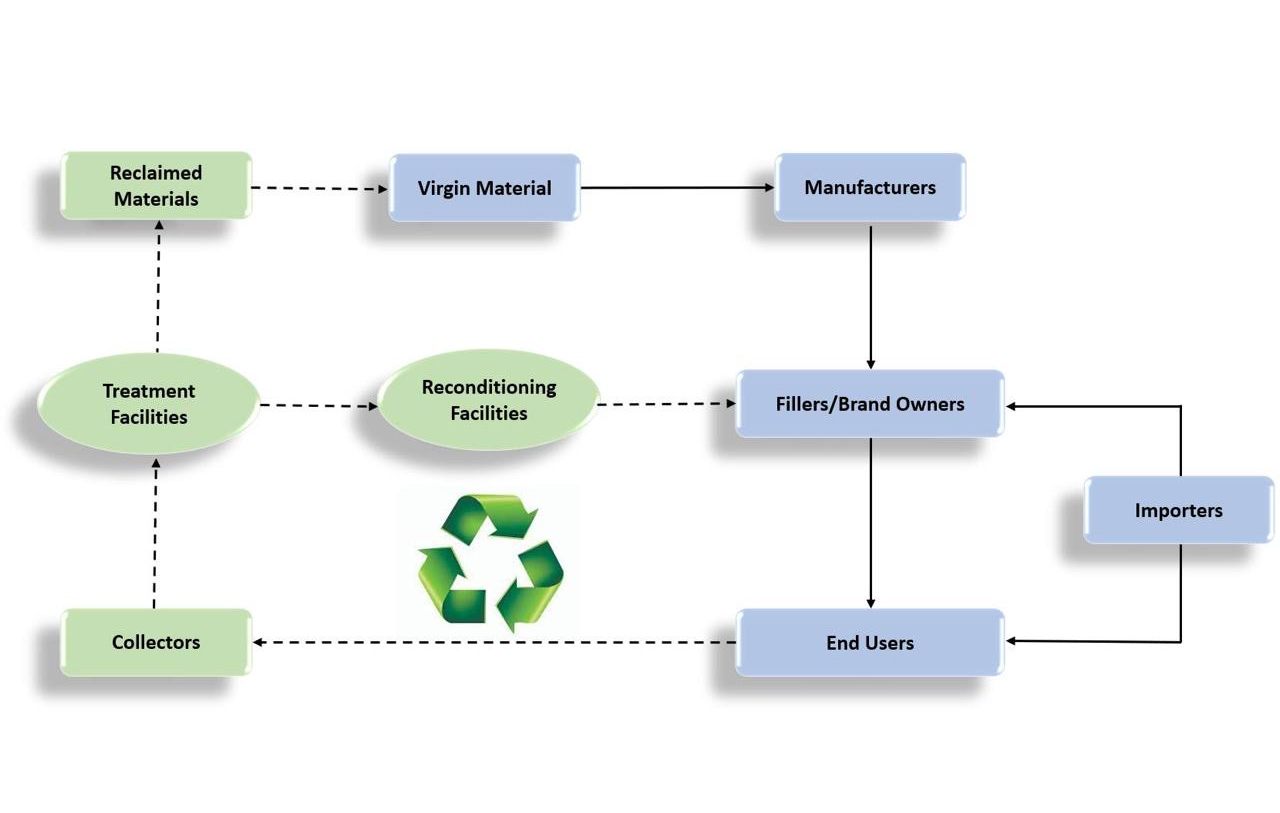
The obligated parties are

Local Manufacturers
If a plastic drum, steel drum, IBC or industrial container is made locally and sold in South Africa,
the manufacturer is responsible for paying the EPR fee.

Importers
If the container is imported – whether empty or filled – the importer is the responsible party.
This includes businesses importing:
- Empty drums or IBCs
- Filled drums containing chemicals, lubricants, detergents, food-grade liquids, solvents, etc.

Reconditioners
When a reconditioned drum or IBC is prepared, certified, and sold back into the market, the reconditioner becomes the EPR fee payer, as they are placing the regulated item back into circulation.
Through structured governance and accountability, SAICRA turns regulation into measurable progress, ensuring every member contributes to a cleaner, compliant, and sustainable South Africa.